

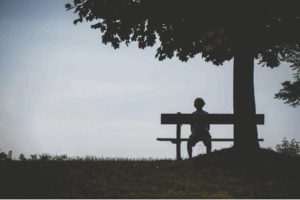
Loneliness is Global: The Solution is Local
The Business vs. Loneliness Report presents the results of an extensive global study on loneliness conducted with The University of Manchester and funded by Mars, Incorporated. The report reveals that loneliness is not just a personal struggle. It is a societal challenge with consequences for health, community well-being, and even the economy. The findings align with what SeniorScapes parks are designed to address: creating environments where older adults and community members can move, connect, and belong.
The Health Impact of Loneliness
The evidence is clear. Loneliness is linked to a 50 percent higher risk of dementia, a 30% higher risk of cardiovascular disease, and a 25 percent higher risk of early death.
These outcomes do not just affect individuals. They create ripple effects in healthcare costs, family systems, and community vitality. In the United States alone, the economic cost of loneliness among older adults is estimated at $6.7 billion annually.
Parks that encourage movement, social interaction, and intergenerational activity are one way to push back against these staggering figures.
Three Types of Loneliness
The report identifies three types of loneliness: intimate, relational, and collective.
SeniorScapes parks are uniquely positioned to address each of these dimensions. Intimate loneliness, the lack of close personal relationships, can be softened by opportunities for friendship formed in recurring walking clubs or group fitness activities. Relational loneliness, the absence of regular social contact, is reduced when neighbors meet consistently in familiar public spaces. Collective loneliness, the feeling of not belonging to a community, is countered by parks that become hubs of identity and pride.
Belonging Matters
People who do not belong to a group are 1.6 times more likely to feel lonely.
SeniorScapes parks invite community membership in a natural and inclusive way. From benches intentionally placed to encourage conversation to programs that bring together people of different generations, these parks are designed as engines of belonging. For the 14 percent of people who say they have nowhere to go when they feel lonely, a SeniorScapes park offers a public and welcoming answer.
Designing for Both Connection and Solitude
One of the surprising findings of the research is that more than half of respondents found positive alone time helpful in overcoming loneliness.
SeniorScapes parks honor this by offering both spaces for social interaction and quiet nooks where solitude is safe and restorative. This balance is crucial. People can choose whether they want to join a group, strike up a conversation, or simply sit in reflection while still feeling connected to a community.
A Public Health Solution
By rethinking the environments where people gather, we can shift loneliness from being a personal burden to being a shared public health challenge that can be addressed with design, policy, and creativity. SeniorScapes parks do exactly this. They create places where health and community intersect, where connection is as much a part of the landscape as the trees and paths, and where belonging is built step by step.
Reference:
Business vs. Loneliness: Pathways to Action Report. Economics of Mutuality Alliance, April 2025.
